 RSS Feed
What Causes
Cancer?
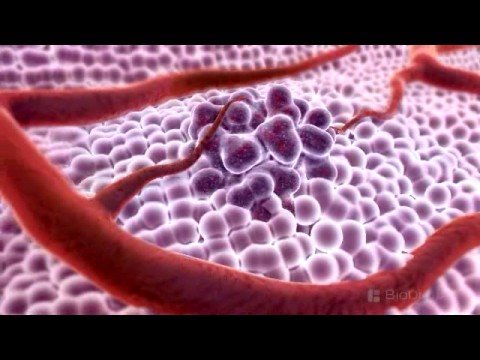
For a start, it has been proven that germs and viruses do not cause cancer. Present cancer research is working on the supposition that cancer is caused by toxins of various kinds which one way or another find their way into the body and in some locations cause damage to the nucleus of a cell, turning it into a cancer cell. The presumption is that a gene within the DNA structure of the cell becomes altered so that the cell begins to multiply. Such a change to the cell's DNA is called a mutation. Also suspected of being able to cause cancer in this way are various forms of radiation, and any substance or influence that either causes cancer or tends to cause cancer is called a carcinogen. This hypothesis is a simple one, and if it were true it should be easy to prove, but although it is well known that certain substances can be carcinogenic, they are not always so, and the mechanism by which they are supposed to work has never been demonstrated. The hypothesis therefore remains only guesswork, and in the minds of most doctors cancer remains a mystery.
However, there is a theory on the causation of cancer which has been proven--one which accords to all known facts and biological laws and has been demonstrated in the laboratory. This theory, called the De-differentiation Theory of Cancer, developed from knowledge accumulated about how aerobic cells generate energy by the respiration of oxygen, and is best explained in the books of four of the 20th Century's greatest medical scientists: Dr Otto Warburg, Dr Max Gerson of Germany, Dr William F. Koch of the USA, and Dr Cornelius Moerman of Holland.
Dr Dean Burk (1904-1988) was a foundation member of the US National Cancer Institute and former head of its Cytochemistry Department. For his work in cancer research he received honors from France, Britain, Germany and Russia. Formerly Associate Professor of Biochemistry, Cornell University, he worked in cancer research at the Kaiser Wilhelm Institute in Germany and at the USSR Academy of Science, Moscow. Dr Burk was the recipient of the Domagk Prize for cancer research, a Knight Commander of the Medical Order of Bethlehem, and a Knight of the Mark Twain Society. He was co-author of the books Cancer, Approaches to Tumor Chemotherapy and cell chemistry and author of over 250 published scientific papers. Dr Warburg said Burk's outstanding and decisive discoveries in cancer research were:
1. the metabolism of the regenerating liver (1941);
2. that the malignancy of cancer was proportional to the fermentation rate of the cells (1956); and
3. that in vivo growing hepatomas produced in vivo by carcinogens were similarly more malignant the higher the fermentation rate (1964).
Dr Max Gerson (1881-1959) was Jewish but didn't enjoy Warburg's standing. He was forced to flee Germany in 1933, spending the last twenty odd years of his life working in the USA. Best known for his successful dietary treatment of migraine, lupus, tuberculosis, diabetes and cancer, Gerson was the author of more than fifty published research papers and four books. Whereas Warburg was supported and honored for his full-time research, Gerson's great work was ignored by the medical establishment. He worked alone devoting his efforts mainly to the treatment of his patients, most of whom had been given up as hopeless cases by other doctors. Under Gerson's care, Dr Albert Schweitzer, double Nobel Laureate, completely eliminated his diabetes and Schweitzer's wife her tuberculosis using Gerson's dietary methods. After Gerson's death Dr Schweitzer said of him: "I see in him one of the most eminent geniuses in the history of medicine." Notwithstanding recognition by such medical greats as Dr Schweitzer and Dr Ferdinand Sauerbruch, Gerson's work received no recognition by the medical establishment, which considered him an unorthodox threat to the medical system.


0 comments:
Post a Comment